Choosing Boat Anchors for a Complete Vessel Arrangement
A boat anchor is one part of a connected arrangement. The anchor geometry, attachment eye, connector, rode, bow roller, securing position and available handling space all need to be reviewed together. A product name is useful for organising an enquiry, but the final selection should identify a specific model and drawing. Two products with similar names can have different proportions, connection details and storage requirements.
This guide introduces four visible configurations in the Hengke Casting range: Danforth, roll bar, wing and folding boat anchors. It helps buyers collect the information needed for a quotation and compare proposals consistently. It does not replace the boat manufacturer’s selection requirements, the chosen product’s instructions or an assessment of the intended operation. Confirm unresolved points before ordering or installing an assembly.
Start with the Boat and the Intended Arrangement
Prepare a short description of the vessel and its existing equipment. Include the boat reference, the proposed anchor location and any requirements supplied by the boat manufacturer. For replacement work, record the existing anchor, connector and roller rather than measuring only one component. Photographs from several directions can reveal a stock, crown, roll bar or connector that is hidden in a single view.
Mark which parts are being replaced and which will remain in service. A new anchor may introduce a different shank length, fluke envelope or attachment position even when it fits the same broad product category. Keep these interfaces visible on the enquiry drawing so that the supplier can review the proposed assembly as a whole.
Danforth Boat Anchors: Identify the Stock and Twin Flukes
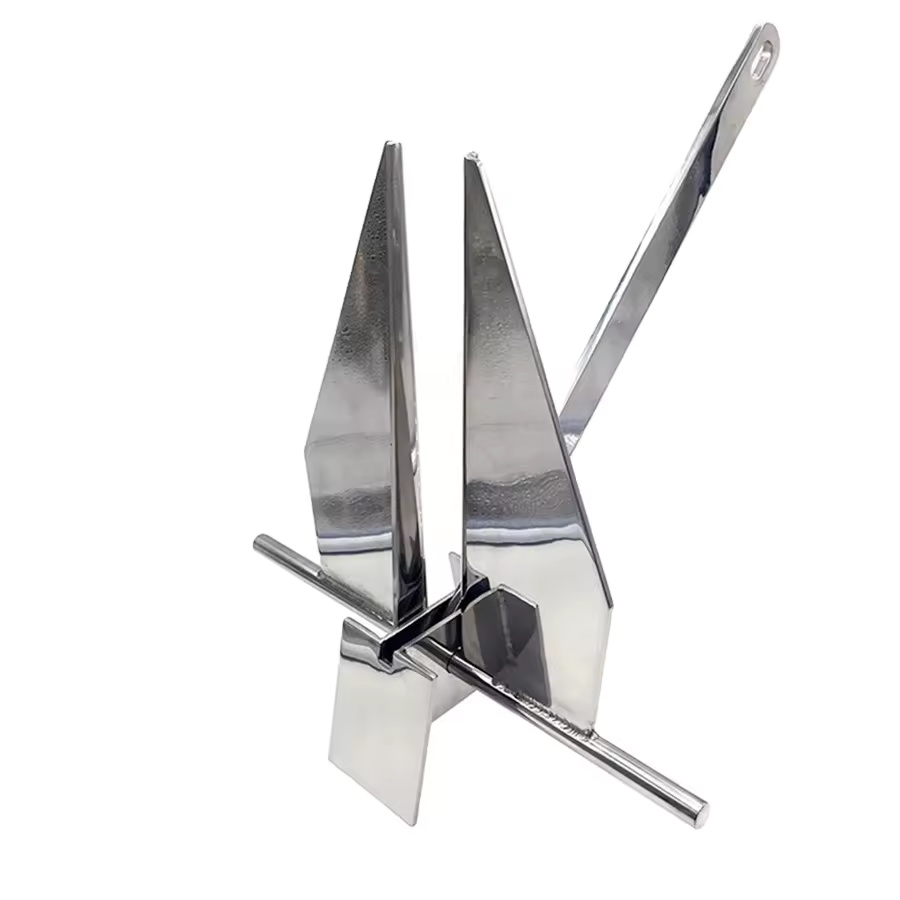
Danforth boat anchors in this group are identified by two flat flukes, a transverse stock and a central shank. The selected image shows that configuration clearly. Record the overall shank length, the full stock span and the envelope around both flukes. Also identify the crown movement and the space needed when the assembly changes position.
Do not treat a stock width as the anchor’s complete storage width without checking the drawing. The shank, flukes and connection can project in different directions. If an existing locker or roller arrangement is being retained, provide its dimensions and clear photographs with the selected product reference. Ask for confirmation of the exact version being quoted.
Roll Bar Boat Anchors: Include the Upper Envelope
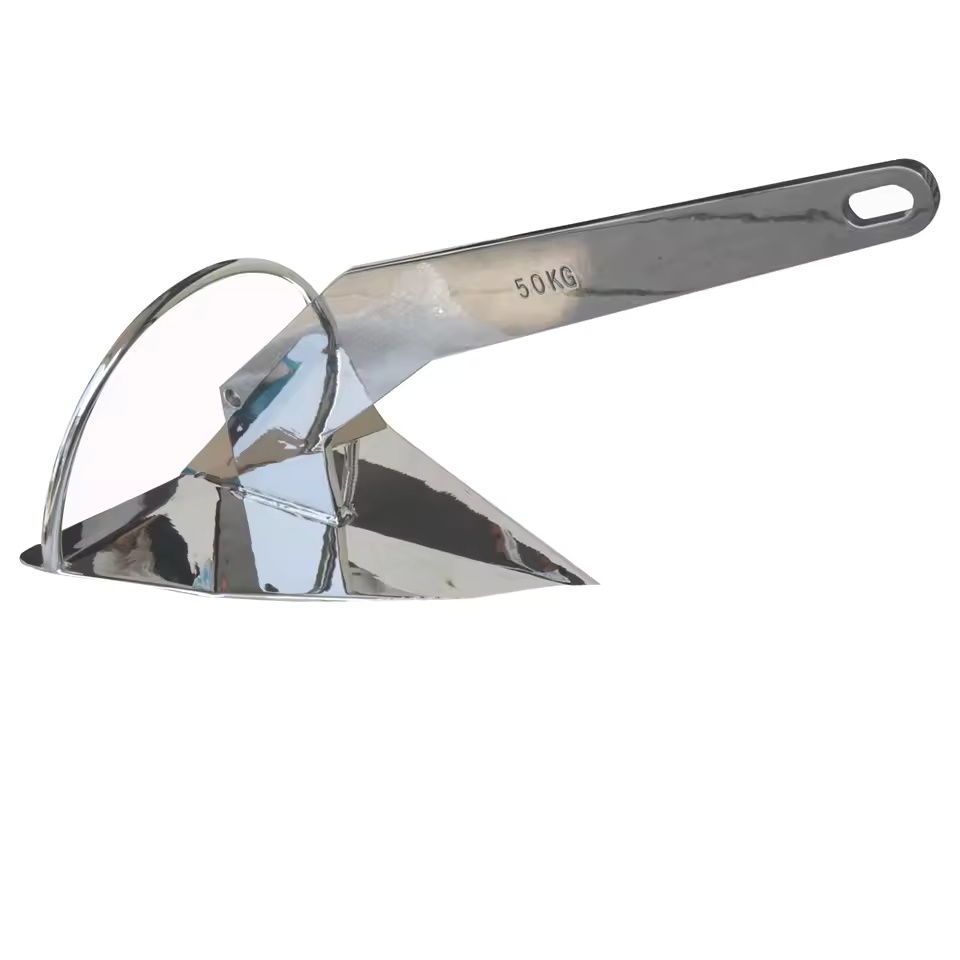
A roll bar boat anchor has a visible bar above the fluke as well as the shank and connection eye. That upper envelope matters when reviewing storage and surrounding equipment. Measure the available space above and beside the proposed resting position, and compare it with the product drawing.
The appearance of a roll bar does not by itself establish a universal operating result or an appropriate boat size. Keep the configuration review separate from any required performance evidence. If a specific rating, test or approval is required for the project, identify it in the enquiry and request documentation for the exact supplied model rather than assuming that another product’s data applies.
Wing Boat Anchors: Review the Shaped Fluke and Fixed Shank
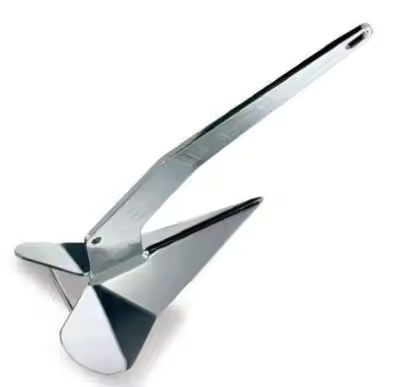
The wing boat anchor photograph shows a shaped fluke and a fixed shank. Review the overall length, fluke width, crown geometry and connector access for the version proposed. A similar outline does not guarantee that a replacement will sit in the same roller position as the existing anchor.
For a bow installation, show the support surfaces and nearby structures on the drawing. Identify the intended securing method and any limitations imposed by the boat arrangement. Avoid changing a connector or altering a component simply to make an unconfirmed assembly fit. Resolve a mismatch through the agreed product specification and installation review before purchasing the final parts.
Folding Boat Anchors: Check Both Stored and Deployed Geometry
Folding boat anchors in this group have four arms around a central crown and shank. Their folded and deployed envelopes are different, so an enquiry should describe both conditions. Record the folded width, overall length, deployed arm span and the movement required at the crown.
Identify the selected model’s arm-retaining arrangement and the space needed to operate it. A photograph with the arms open does not describe every storage or securing detail. Request the corresponding drawing and instructions for the actual version. Include the planned storage location and any adjacent fittings so that accessibility can be reviewed together with the anchor dimensions.
Prepare a Dimensioned Interface Drawing
A clear enquiry drawing does not have to be elaborate, but it should use one consistent unit system and identify the important interfaces. Show overall length, the widest envelope, the attachment-eye opening and the connection location. Add a drawing revision and date so that later quotations do not mix measurements from different versions.
For replacement components, distinguish measured values from estimated ones. Mark uncertain dimensions for confirmation instead of presenting them as established facts. Provide a reference photograph beside the drawing when possible. This makes it easier to recognise an orientation error, a missing projection or a dimension taken between the wrong surfaces.
Specify the Connection and Supplied Components
List the parts expected in the order. The anchor, shackle, swivel, chain and other connection items should not be assumed to be included merely because they appear in a reference photograph. Identify each required interface and the items that will be supplied by others.
Check that the quoted drawing and supplied-parts list describe the same assembly. The eye opening, connector geometry and surrounding clearance must be reviewed for the chosen version. Follow the applicable product instructions for installation and operation. If the proposal changes a connector or introduces a different arrangement, obtain confirmation before treating the revised assembly as interchangeable with the original.
Agree Material and Finish Without Relying on Appearance
A bright polished photograph cannot establish the metal grade or the manufacturing route. State the required material and any supporting documentation in the purchase specification. If the project needs a particular finish, describe it through an agreed reference or sample and identify the surfaces to which it applies.
Keep appearance requirements separate from dimensional and material requirements. An acceptable surface finish does not prove that the attachment detail matches the drawing, and a matching shape does not establish the requested material. Review each requirement against the selected product reference. Ask the supplier to identify any proposed deviation in writing before the order is confirmed.
Request Evidence for the Exact Model
Where a project requires test information, material documents or other supporting evidence, identify those requirements early. State the required document type, product reference and applicable scope. A certificate or report associated with another product or a general company presentation should not be treated as evidence for every anchor in a range.
The quotation should make clear which documents are included and which require separate agreement. Review names, drawing revisions and model identifiers for consistency. If evidence is unavailable or its scope is unclear, resolve the issue before using the document as a basis for selection. Avoid adding unverified ratings to an enquiry solely because they appeared in a marketplace title.
Compare Quotations on the Same Basis
Price comparisons are more useful when all proposals refer to the same configuration, quantity, material, finish and supplied components. Ask each quotation to identify the model or drawing revision. Also record the packaging, inspection scope and delivery basis so that differences in the offers remain visible.
A lower headline price may describe a different version or exclude a requested item. Clarify those differences rather than comparing totals without their underlying specifications. Keep optional items separate and identify any changes proposed by the supplier. This creates a clearer record of what was reviewed and reduces ambiguity when the order is placed.
Plan Receiving Checks and Records
Before delivery, agree which visual and dimensional checks will be made against the purchase specification. Identify the parts list, drawing revision, material documents and finish reference that should accompany the order. Packaging should keep the supplied components identifiable and help protect the agreed appearance during handling.
On receipt, compare the delivered items with the agreed reference and record any discrepancy before the assembly is installed. Retain the product instructions and supporting documents with the boat or project records. If the supplied geometry differs from the approved drawing, seek clarification rather than adapting the installation around an unidentified part.
Prepare a Clear Boat Anchor Enquiry
Send Hengke Casting the selected configuration, quantity, vessel or project context, dimensioned drawing and photographs of the intended installation. Include the connector and rode interfaces, storage envelope, securing arrangement, material, finish and required documentation. State any fixed installation constraints and identify measurements that still need confirmation.
Use the four product pages to organise the discussion, then request a proposal for the exact version required. The enquiry, quotation, drawing and final order should refer to the same product. Keeping those records aligned is more useful than relying on a broad category name or an attractive photograph when reviewing a complete boat anchor arrangement.
Keep One Product Reference Throughout the Project
Use the same reference in emails, marked photographs, drawings, inspection notes and purchase documents. When a dimension or component changes, issue a revised record and identify the superseded version. This is especially helpful when several similar anchors are being compared at once. A concise revision history allows both buyer and supplier to see what has actually been agreed and which questions remain open before production or dispatch.